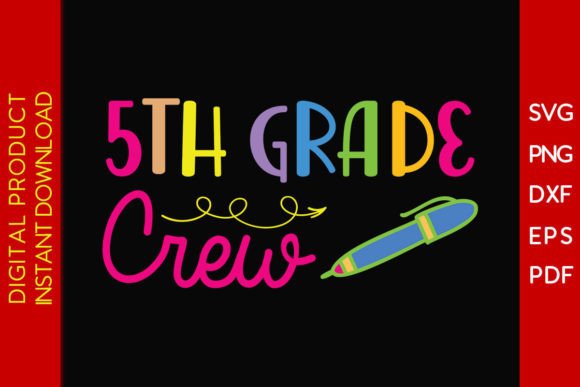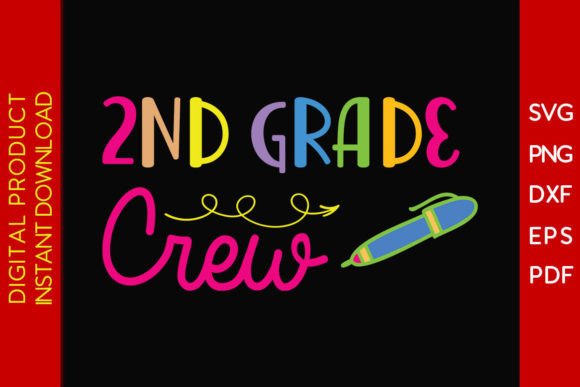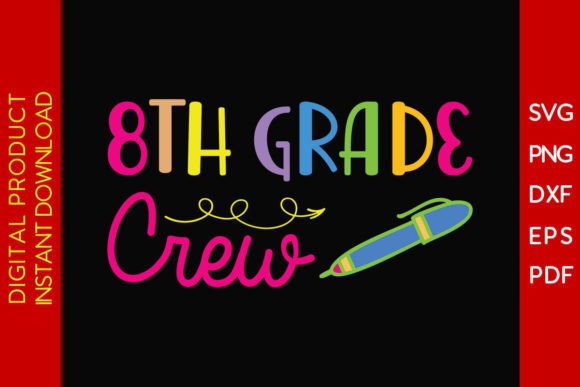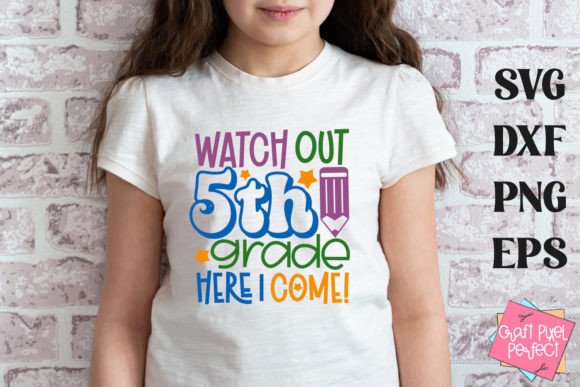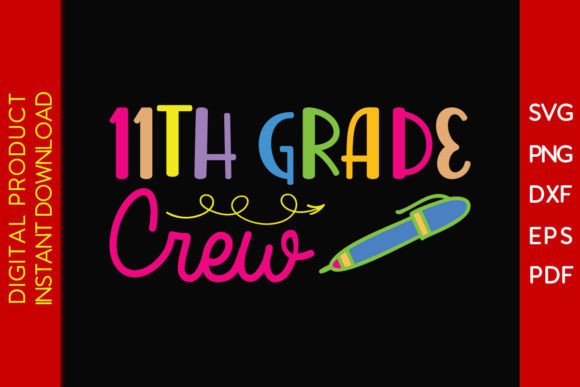
11th Grade Crew Back to School Gift SVG
For educators, craft entrepreneurs, and creative professionals preparing for the new academic year, the 11th Grade Crew Back to School Gift SVG isn’t just another digital file—it’s a production-ready asset designed to integrate seamlessly into real-world workflows. Whether you’re running a small Etsy shop, organizing a school spirit campaign, or personalizing graduation-themed merchandise, this SVG collection delivers precision, flexibility, and immediate usability across multiple platforms and physical outputs.
What It Is—and Where It Fits in Your Workflow
The 11th Grade Crew Back to School Gift SVG is a multi-format vector bundle optimized for scalability and compatibility. It includes SVG, DXF, EPS, PNG, and PDF files—packed into a single ZIP archive—so you don’t need to juggle separate downloads or convert files manually. Unlike raster graphics that blur when enlarged, these vector-based designs retain crisp edges at any size, making them ideal for everything from tiny iron-on transfers to large wall decals.
This isn’t a standalone decoration—it’s a workflow enabler. Think of it as a modular component: you acquire it early in your planning cycle, test it during prototyping, deploy it across product lines, and reuse it seasonally with minimal adjustments. Its value increases when treated as part of a broader system—not just a one-off graphic, but a repeatable, reliable element in your creative pipeline.
How It Integrates Before, During, and After Projects
Before starting: Use the SVG files to plan inventory, estimate material usage, and align design choices with production tools. For example, if you’re prepping 50 custom t-shirts for an 11th-grade orientation event, open the SVG in Cricut Design Space first to check layering, cut settings, and weeding complexity—then adjust your vinyl order accordingly. This prevents mid-process surprises like unexpected overcuts or alignment issues.
During execution: The format versatility means no software lock-in. A freelance designer using Adobe Illustrator can refine colors and spacing; a teacher using Silhouette Studio can resize and group elements for classroom posters; a small business owner running Brother ScanNCut machines can import the DXF directly for precise contour cutting. Each format serves a specific stage: SVG for web-based editing, DXF for CNC and industrial cutters, PNG for quick mockups or digital cards, and PDF for print-ready layouts.
After launch: Because all files are included in one download, version control stays simple. You don’t need to track which platform used which file—you keep the ZIP archived, label it with the date and use case (e.g., “11th Grade Crew – Fall 2024 T-Shirts”), and revisit it next year with confidence. No re-purchasing. No lost links. Just consistent, documented access.
Practical Implementation Tips for Real Workflows
- Test before scaling: Load the SVG into your primary cutting software and run a test cut on scrap material. Check how text strokes hold up at small sizes (e.g., 1.5” tall) and whether layered elements (like banners or badges) align cleanly without manual repositioning.
- Organize by output type: When unpacking the ZIP, create subfolders—“Cricut,” “Silhouette,” “Print,” “Web”—and move only the relevant formats into each. This avoids accidental misuse (e.g., trying to cut with a low-res PNG).
- Leverage transparency intentionally: The PNG version includes transparent backgrounds—ideal for digital invitations or social media posts where you need clean overlays on photos or branded templates. Use it in Canva or PowerPoint without background removal steps.
- Batch customize efficiently: In Silhouette Studio or Cricut Design Space, duplicate the base design and swap out grade numbers or names using built-in text tools. Save each variation as a separate project file—not as new SVGs—so you preserve the original integrity while maintaining customization speed.
Compatibility Considerations That Impact Output Quality
Not all SVGs behave the same way across platforms. This collection was built with cross-software fidelity in mind: paths are simplified (no excessive anchor points), fonts are outlined (so “11th Grade Crew” renders identically whether or not your machine has the font installed), and grouping follows industry-standard layer logic. That means fewer troubleshooting loops when moving between Cricut Explore and Silhouette Cameo—or when handing off files to a print vendor who prefers EPS.
If you're integrating with CNC plasma or laser systems, the DXF version ensures clean line definitions and closed vector paths—critical for accurate toolpath generation. For educators embedding designs into Google Slides or Microsoft Word, the PDF version maintains typography and spacing without requiring external fonts or plugins.
Long-Term Usability and Consistency Across Seasons
Back-to-school projects often recur annually—but quality drift happens when assets aren’t maintained. With the 11th Grade Crew Back to School Gift SVG, consistency is baked in. Because the core vector structure remains unchanged across formats, color adjustments made in Illustrator reflect accurately in Silhouette Studio previews. That predictability reduces revision cycles and supports brand alignment—especially important for schools, PTAs, or small businesses building recognizable visual identities over time.
Also consider storage efficiency: instead of saving ten variations of the same logo across different years, keep one well-organized ZIP and document changes in a simple Notion or Excel log (e.g., “2024: added ‘Class of 2025’ badge variant”). That approach scales cleanly and supports auditability—useful whether you’re reporting to a school board or optimizing your own Etsy backend.
Real-World Use Cases Beyond the Obvious
While t-shirts and wall decals are common applications, this SVG set shines in less obvious contexts too:
- Educators: Embedding the SVG into editable Google Docs templates for student-led welcome packets—then exporting as PDFs for printing or sharing digitally.
- Freelance designers: Using the EPS file as a base layer in Adobe InDesign layouts for school newsletters or annual reports—scaling without pixelation, adjusting CMYK swatches for offset printing.
- Small business owners: Importing the DXF into LightBurn to etch the design onto wooden keepsake boxes sold alongside senior portraits.
- Hobbyists: Combining the PNG with Procreate brushes to hand-letter complementary messages (“You’ve Got This!”) on digital greeting cards—then exporting layered PSDs for future reuse.
Each use case relies on the same foundational asset—but adapts fluidly based on tooling, audience, and output medium. That adaptability isn’t accidental. It reflects intentional design decisions around path construction, naming conventions, and format-specific optimizations—all aimed at reducing friction, not adding it.
Final Notes on Execution Discipline
Even high-quality SVGs won’t deliver results without disciplined execution. Start by verifying your software version supports the included formats (e.g., older versions of Silhouette Studio require DXF over SVG). Then confirm your cutting mat size matches the largest design dimension—no point scaling a 24” banner if your machine only handles 12”. Finally, name your exported project files meaningfully: “11thGradeCrew_TShirt_2024_Cricut” tells you more than “design1.svg” ever could.
The 11th Grade Crew Back to School Gift SVG works best when treated as infrastructure—not decoration. It supports faster iteration, tighter quality control, and smoother handoffs between roles. And because delivery is instant upon payment (via secure download link), there’s zero delay between decision and deployment. That immediacy matters when deadlines are tight, budgets are lean, and expectations are high.