Kindergarten Zoo Crew, Back to School: A Creative Catalyst for Educators and Small Business Creators
As summer winds down and classrooms prepare to welcome students once again, a distinctive design motif is gaining traction across educational resources, classroom décor, and small-batch merchandise: Kindergarten Zoo Crew, Back to School. More than just an adorable illustration set, it represents a thoughtful convergence of pedagogical intention, visual storytelling, and digital craft readiness — one that resonates deeply with today’s educators, curriculum designers, and creative entrepreneurs.
A Design That Speaks the Language of Early Learners
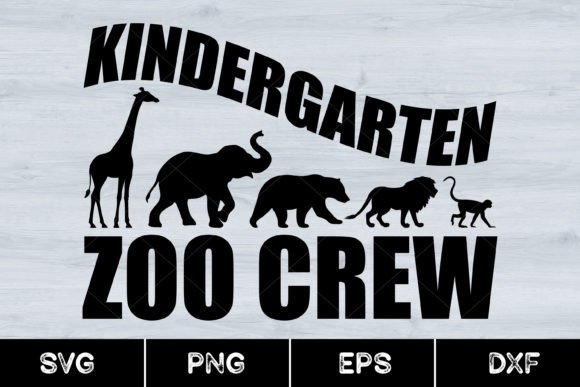
Kindergarten Zoo Crew, Back to School is a cohesive, character-driven graphic collection featuring friendly animal figures—each dressed in school-appropriate attire (think backpacks, name tags, and tiny notebooks)—set against clean, joyful backdrops. Designed with early childhood development principles in mind, the artwork balances simplicity and expressiveness: bold outlines, high-contrast colors, and consistent proportions support visual recognition and emotional connection for children ages 4–6.
But its value extends far beyond the classroom wall. This design suite was built with technical precision and cross-platform utility in mind. You will receive this design in the following formats — SVG File, Transparent PNG, EPS10, and DXF. Each format serves a distinct purpose: SVG for responsive web integration and interactive learning tools; transparent PNG for print-ready overlays and social media assets; EPS10 for professional vector editing and large-format printing; and DXF for laser cutting, CNC routing, and vinyl plotting. Crucially, you are more than welcome to use this file for your craft and small business ideas, but you are NOT permitted to resell the digital files.
Bridging Education and Entrepreneurship
The rise of Kindergarten Zoo Crew, Back to School reflects a broader shift in how educators and creators approach resource development. No longer confined to static worksheets or off-the-shelf posters, today’s teaching professionals increasingly curate personalized, multi-sensory learning environments. At the same time, micro-entrepreneurs—especially those in the education-adjacent craft space—are seeking scalable, on-brand assets that align with seasonal demand spikes like back-to-school.
This dual demand has accelerated adoption of “design-first” educational assets: visuals that are not only pedagogically sound but also production-ready. For example, a Montessori-aligned teacher might embed the SVG version into an interactive digital storybook using H5P or Google Slides, while a small-batch sticker maker uses the DXF file to cut durable vinyl decals for student reward charts. A boutique stationery brand could layer the transparent PNG over hand-lettered typography to produce limited-run greeting cards for “First Day of Kindergarten” celebrations.
Why Compatibility Matters More Than Ever
The phrase “Please be sure your machine software are compatible” isn’t a footnote—it’s a critical operational checkpoint. As creative workflows grow more hybrid (digital + physical), compatibility directly impacts time-to-market, material yield, and output fidelity. An EPS10 file opened in legacy Adobe Illustrator versions may render fonts incorrectly; a DXF imported into certain CNC software without proper layer mapping can cause toolpath errors; and an SVG scaled beyond intended dimensions in a web CMS may lose crispness on high-DPI displays.
That’s why Kindergarten Zoo Crew, Back to School was engineered with backward and forward compatibility as a core requirement—not an afterthought. The SVG adheres to SVG 1.1 specifications for broad browser and LMS (Learning Management System) support. The EPS10 conforms to Adobe Illustrator CC 2019+ standards, ensuring seamless integration with modern print-on-demand platforms. And the DXF follows AutoCAD 2018+ conventions, enabling reliable import into popular fabrication tools like LightBurn, Cricut Design Space (via DXF import plugins), and Fusion 360.
Aligning With Evolving Consumer and Institutional Expectations
Consumers—whether parents purchasing classroom gifts or school districts evaluating vendor proposals—are increasingly attuned to design integrity, inclusivity, and sustainability. Kindergarten Zoo Crew, Back to School meets these expectations through intentional choices: gender-neutral clothing cues, diverse skin-tone options embedded in the color palette, and scalable vector formats that eliminate the need for repeated raster conversions (reducing digital bloat and supporting eco-conscious cloud storage practices).
Simultaneously, institutions are tightening procurement guidelines around digital asset licensing. Many school districts now require vendors to provide clear usage terms—particularly regarding redistribution rights. The explicit restriction on reselling the digital files reinforces responsible IP stewardship, protecting both the original creator and end users from unintended legal exposure. This transparency builds trust and streamlines approval processes for educators integrating third-party assets into district-sanctioned materials.
Real-World Integration: From Concept to Classroom
Consider two practical applications:
- A homeschool co-op leader downloads the transparent PNG and layers it onto editable Google Docs templates for student name badges and weekly schedule boards. Because the background is fully transparent, no manual erasing or masking is needed—saving 15–20 minutes per batch.
- A K–2 curriculum designer imports the SVG into Figma and animates individual zoo characters to appear sequentially during phonics instruction (e.g., “Z is for Zebra!”). The vector scalability ensures pixel-perfect rendering on both tablet screens and interactive whiteboards.
These aren’t hypotheticals—they’re documented use cases reported by early adopters across Pinterest educator communities, Teachers Pay Teachers forums, and small-business Facebook groups focused on education-adjacent crafts.
Tech-Enabled Creativity, Rooted in Pedagogy
What distinguishes Kindergarten Zoo Crew, Back to School from generic clipart is its grounding in evidence-informed practice. The characters were developed in consultation with early literacy specialists to reinforce visual memory for letter-sound associations (e.g., the “K” kangaroo holding a kite; the “B” bear with a backpack). Their consistent posture and orientation support visual scanning skills—a foundational component of reading readiness.
Yet this pedagogical rigor doesn’t compromise creative flexibility. Because the assets ship in layered, grouped vector formats, users can easily isolate elements: swap out accessories, recolor individual animals, or extract silhouettes for tactile learning kits. This modularity supports differentiated instruction—teachers can adapt visuals for neurodiverse learners without redesigning from scratch.
Looking Ahead: Design as Infrastructure
As AI-assisted design tools proliferate, the value of human-crafted, context-aware assets like Kindergarten Zoo Crew, Back to School is intensifying—not diminishing. Generative tools excel at variation, but they often lack domain-specific nuance: understanding why a lowercase “g” needs extra descender clearance in kindergarten fonts, or how spacing between animal characters affects visual tracking for emerging readers.
In this landscape, thoughtfully engineered design files function less like decorative add-ons and more like infrastructure—foundational components that accelerate implementation, reduce cognitive load for creators, and ensure fidelity across touchpoints. They empower professionals to focus on what matters most: fostering engagement, deepening understanding, and building inclusive learning experiences.
For educators, this means less time troubleshooting file imports and more time designing meaningful interactions. For small business owners, it means faster prototyping cycles and cleaner product photography. For marketers and freelancers serving the education sector, it means delivering higher-value, compliant, and instantly recognizable assets to clients—without reinventing the wheel.
Ultimately, Kindergarten Zoo Crew, Back to School exemplifies a quiet but powerful trend: the rising importance of interoperable, ethically licensed, pedagogically grounded design in a world where learning, making, and selling increasingly happen on the same digital platform—and often, in the same afternoon.