Preschool Back to School Pack for Kids
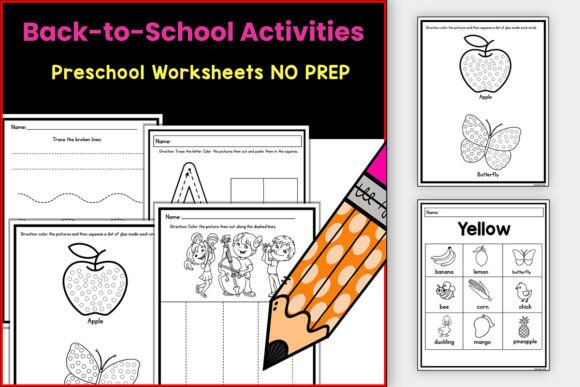
Returning to school isn’t just about new backpacks and lunchboxes—it’s about building confidence, routine, and readiness. The Preschool Back to School Pack for Kids meets that moment with intention. Designed for preschool, pre-kindergarten, transitional kindergarten, and kindergarten prep learners, it’s a thoughtfully curated collection of no-prep, print-and-go activities—no laminating, cutting, or lesson planning required. What makes it stand out isn’t just convenience, but its focus on foundational skills woven into playful, developmentally appropriate tasks.
More Than Just Worksheets—A Readiness Toolkit
This pack supports the whole child—not just academic readiness, but physical coordination, visual discrimination, self-expression, and early independence. Each activity serves a clear developmental purpose:
- Pre-writing tracing practice builds hand strength and directional control—essential before pencil grip stabilizes.
- Name writing pages anchor identity and literacy; seeing their own name reinforces letter-sound awareness and ownership of learning.
- Gluing and cutting practice aren’t “just crafts”—they’re functional fine motor training that strengthens neural pathways for later handwriting and tool use.
- Alphabet and number tracing (upper and lowercase) embed formation fluency alongside recognition—without rote repetition.
- Shape and color activities connect visual perception to language and categorization, laying groundwork for math and descriptive thinking.
What’s especially practical is how seamlessly these components integrate. A child might trace their name, cut out letters from that same name, glue them onto a shape outline, then color it using the target color—turning one worksheet into a multi-sensory sequence.
Creative Uses Across Settings
The Preschool Back to School Pack for Kids adapts fluidly to different roles and environments—not as a rigid curriculum, but as a flexible resource bank.
For teachers: Use pages as morning warm-ups, small-group station rotations, or differentiated take-home folders. Try pairing the name-writing page with a classroom photo board—students match printed names to peers’ pictures, reinforcing social-emotional connection alongside literacy.
For homeschoolers: Layer activities into themed weeks—e.g., “Shape Week” could include tracing circles, coloring circle-based objects (wheels, apples, clocks), cutting out paper circles to build collages, and gluing them onto a “My Circle World” poster. The pack provides the core skill work; you provide the narrative and extension.
For parents and caregivers: These sheets work beautifully during low-energy windows—quiet afternoons, travel delays, or rainy days. Keep a folder in the car or by the kitchen table. Let your child choose one activity per day—not as homework, but as shared focus time. A five-minute tracing session followed by you asking, “Which letter did you write first? Why do you think it’s shaped like that?” turns practice into conversation.
Simple Adaptations for Real Needs
No two children learn the same way—and no two educators have identical constraints. Here’s how to adapt without overcomplicating:
- For children with motor challenges: Swap scissors for tearing practice on thick paper strips, or use dot-to-dot versions of tracing paths before moving to full lines.
- For multilingual learners: Add sticky notes with translated shape or color words beside the English version—or invite families to label completed pages in home languages.
- For sensory seekers: Print on textured paper, use glue sticks with scented varieties (unscented options available too), or pair tracing with finger-paint or sand trays.
- For digital integration: Scan completed worksheets into a portfolio app like Seesaw. Record a short voice note where the child names shapes they colored or reads their traced name aloud—documenting growth across modalities.
Keeping It Consistent—Without Being Rigid
Consistency matters more than volume. Five minutes daily with focused attention yields stronger results than one long, overwhelming session weekly. To keep things sustainable:
- Choose one skill area per week—e.g., “Cutting & Gluing Week.” Rotate through the pack’s sections intentionally, not randomly.
- Store materials in a consistent place—a labeled bin with child-accessible scissors, glue sticks, and crayons reduces friction and builds autonomy.
- Track progress simply: Take a photo of the first and last name-writing page. Compare spacing, letter orientation, and pressure—not perfection, but observable growth.
- Revisit—not replace. Reuse the alphabet tracing sheet with different colored pencils, or ask your child to “teach” the shape page to a stuffed animal. Familiarity breeds confidence.
Why This Works Beyond the First Week
The Preschool Back to School Pack for Kids doesn’t fade after September. Its open-ended design supports ongoing development: use number tracing for counting real-world objects (“How many blocks did you stack?”); repurpose the cut-and-paste name activity for spelling simple CVC words later in the year; turn color pages into sorting games with buttons or pom-poms.
It also models what effective early learning looks like—not flashy, not rushed, but rooted in repetition, choice, and responsive interaction. When an adult sits beside a child, not to correct but to notice (“I see you held the scissors just right!”), the worksheet becomes secondary to the relationship—and that’s where real readiness takes root.
Whether you’re preparing a classroom of twenty, supporting one child at home, or designing inclusive learning experiences for a community program, this pack offers structure without rigidity, simplicity without sacrifice. It’s not about filling time—it’s about honoring the quiet, steady work of becoming a learner.