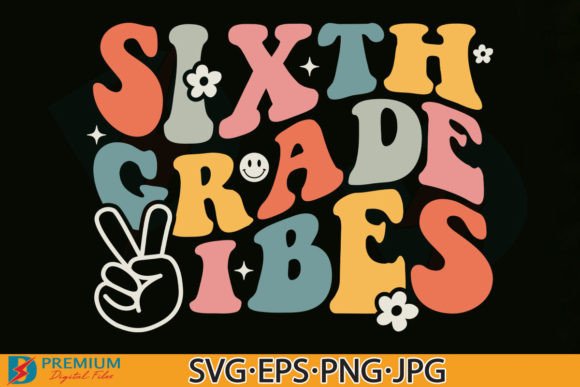
Sixth Grade Vibes SVG: A Practical Guide to 6th Back to School Digital Design Assets
As the academic year shifts into gear, educators, small business owners, and creative families increasingly turn to digital design tools to personalize classroom materials, student gifts, and school spirit merchandise. Among the most sought-after resources for this transition is the Sixth Grade Vibes SVG, 6th Back to School collection—a thoughtfully assembled set of scalable, editable files tailored specifically for middle-grade engagement. Unlike generic back-to-school graphics, this bundle bridges pedagogical relevance with technical versatility—making it a functional asset across diverse real-world workflows.
Why Sixth Grade Vibes SVG Stands Out in Educational Design
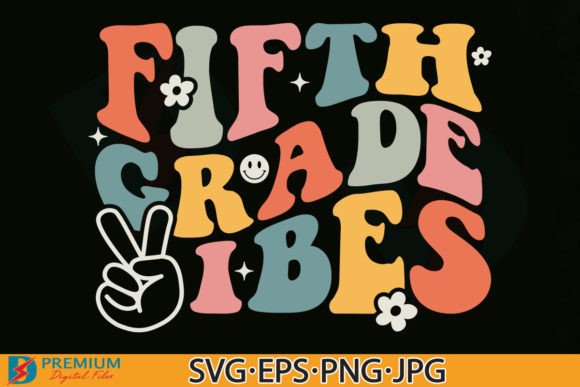
Design assets for sixth grade carry unique expectations—not just age-appropriate aesthetics, but thematic resonance with developmental milestones: emerging independence, collaborative learning, and identity exploration. The Sixth Grade Vibes SVG, 6th Back to School collection reflects that nuance through intentional visual language—think bold yet approachable typography, balanced color palettes (not overly juvenile nor prematurely mature), and inclusive iconography like notebooks, pencils, globes, and growth-themed motifs. These aren’t clipart placeholders; they’re crafted visual anchors meant to support authentic classroom culture and student ownership.
What elevates this beyond typical themed bundles is its multi-format architecture. Rather than offering only one file type and expecting users to convert or adapt, it delivers seven purpose-built files—each serving a distinct role in production pipelines. This structure acknowledges how varied the needs are across users: a teacher printing name tags on an inkjet printer requires different output than a small-batch apparel entrepreneur running a Cricut Explore Air 2 or a scrapbooker layering elements in Silhouette Studio.
Breaking Down the Seven File Types—and What Each Enables
The ZIP package contains precisely seven files, each selected for compatibility, fidelity, and flexibility. Understanding their individual roles helps users avoid workflow bottlenecks and maximize output quality.
- Two PNG files (300dpi, transparent background): Ideal for digital use—inserting into Google Slides presentations, Canva lesson templates, or printed handouts where clean edges matter. The high resolution ensures crispness even when scaled up for bulletin board displays or laminated reference charts.
- One PNG file (Cricut/Silhouette-optimized, transparent background): Engineered for cutting machines. This version uses simplified paths and flattened layers—critical for reliable mat registration and blade tracking. It’s not merely “another PNG”; it’s pre-tested for cut accuracy on common vinyl and heat-transfer materials.
- One JPG file (300dpi, white background): Designed for contexts where transparency isn’t needed—or isn’t supported. Think email newsletters, printed parent flyers, or social media posts where white-framed visuals align with institutional branding guidelines.
- One EPS file (vector): The universal vector standard. Opens cleanly in Adobe Illustrator, CorelDRAW, and Inkscape. Essential for professional print shops needing CMYK-ready artwork or designers integrating the motif into larger layouts—logos, banners, or custom curriculum binders.
- One SVG Group file: Pre-assembled for Cricut Design Space. All elements remain grouped, preserving alignment and proportion. Useful when applying consistent effects—like shadow layers or contour cuts—without manual repositioning.
- One SVG Ungroup file: Offers granular control. Users can recolor individual components (e.g., changing a pencil icon from blue to green), adjust spacing between text and graphics, or isolate parts for layered vinyl applications on tumblers or notebooks.
This deliberate format diversity means users aren’t forced into workarounds—no tracing raster images, no guessing at color separation, no battling unexpected transparency glitches mid-project. It reflects deep familiarity with both educational timelines and maker-space realities.
Real-World Applications Across User Groups
The strength of Sixth Grade Vibes SVG, 6th Back to School lies in its cross-role utility—not as a novelty, but as infrastructure.
Educators use the transparent PNGs to build interactive digital anchor charts in Nearpod or insert into editable PDF worksheets. The ungrouped SVG allows quick customization: swapping “Welcome to 6th Grade!” for “Welcome to Mrs. Lee’s Math Lab!” while retaining consistent styling. One middle school instructional coach reported using the EPS file to create reusable stencils for hallway floor decals—reinforcing school-wide expectations with grade-specific tone.
Small business owners leverage the vector and high-res raster files for product diversification. A boutique selling personalized water bottles imports the SVG into Cricut Design Space, adjusts sizing for curved surfaces, then exports a cut-ready file for heat-transfer vinyl. Simultaneously, the JPG version feeds into Shopify product mockups—ensuring customers visualize scale and contrast before purchasing.
Hobbyists and parents appreciate the immediate usability. No design software required for basic tasks: drag the PNG into a Word document to make custom lunchbox notes, or upload the Cricut-optimized PNG directly into Cricut Access for quick iron-on transfers. The ability to change colors without distortion—thanks to vector foundations—means one purchase supports multiple children across different grade years or classroom themes.
Technical Considerations Before You Begin
While the bundle is intentionally broad in compatibility, responsible usage starts with verification—not assumption. Sixth Grade Vibes SVG, 6th Back to School files perform best within expected parameters:
- Cricut Design Space accepts SVG, PNG, and JPG—but requires the PNG to be under 10 MB and saved with embedded transparency (not alpha channel only). The included Cricut-specific PNG meets this.
- Silhouette Studio (Designer Edition) opens SVG and EPS natively; Basic Edition requires SVG import via the “Send to Silhouette” plugin. Users on older versions should confirm SVG support before purchase.
- Adobe Illustrator and Affinity Designer handle EPS and SVG seamlessly; however, some free vector editors may render complex gradients or clipping masks inconsistently. Testing with the provided EPS first is advisable.
- For shirt printing, the 300dpi JPG or PNG works well for direct-to-garment (DTG) printers, while the EPS or ungrouped SVG is preferred for screen-print separations or embroidery digitizing workflows.
It’s also worth noting what the files do not include: no fonts (text elements are outlined), no layered PSD files, and no commercial redistribution rights. This preserves integrity for creators while clearly defining scope—aligning with ethical digital asset practices.
Workflow Integration Tips for Maximum Efficiency
Users consistently report time savings when embedding these files into repeatable systems. For example:
- A homeschool co-op organizes all 6th-grade welcome materials in a shared Google Drive folder. They store the SVG Ungroup file there—so any parent volunteer can open it in Cricut Design Space, change the class year (“2024–2025”), and cut matching door hangers in under five minutes.
- An after-school STEM program uses the EPS file as a base layer in Illustrator, adding custom circuit diagrams or coding syntax in complementary fonts—creating cohesive, on-brand activity badges without starting from scratch.
- A district communications team repurposes the JPG version across platforms: resized for Twitter headers, cropped for Instagram story highlights, and embedded in internal PDF memos—all maintaining consistent visual recognition.
These aren’t theoretical efficiencies. They emerge from the bundle’s foundational design philosophy: anticipate repetition, reduce friction, and honor the user’s existing tools—not force adoption of new ones.
Final Thoughts on Value Beyond the Download
At its core, Sixth Grade Vibes SVG, 6th Back to School functions as more than decorative content. It’s a translation layer—converting pedagogical intention into executable design, and technical capability into tangible outcomes. Whether used to foster belonging on day one, reinforce curriculum themes throughout the year, or generate sustainable micro-income through custom merchandise, its value scales with the user’s goals—not just their software license.
Because it’s delivered as an instant digital download, there’s no shipping delay, no inventory risk, and no physical storage needed. Yet its impact persists: on classroom walls, student backpacks, community event signage, and even informal peer-to-peer exchanges (a 6th grader proudly wearing a shirt featuring the SVG’s “Future Historian” icon, sparking conversation about career pathways).
In an era where educators juggle ever-expanding responsibilities and creators seek reliable, ethically sourced assets, this collection offers quiet reliability—not flash, but function; not trend-chasing, but thoughtful longevity.